How to Hire Faster with These 9 Strategies
AI Adoption in HiringAugust 3, 202610 MIN READ
Looking for something specific?
Check out the filters!
Attracting and retaining top talent hinges significantly on a company’s ability to showcase itself as an ideal place to work.
Think about it – when was the last time you made a major decision without doing a bit of research first? Whether it’s choosing a restaurant, a movie, or even a new gadget, we all look for reviews and recommendations.
Job seekers are no different, whether they are active candidates actively looking for new opportunities or passive candidates who aren’t currently job hunting but may be swayed by a compelling employer brand.
In fact, 75% of job seekers consider an employer’s brand before even hitting ‘apply.’ That means having a good employer branding strategy is a must-have.
So, what is an employer branding strategy, and how can you build one that stands out in the highly competitive job market? Let’s get into it.
Employer branding strategy is about shaping the perception of your company as a great place to work, both internally and externally.
It involves a series of coordinated efforts aimed at enhancing your organization’s image as an employer of choice.
This strategy not only helps in attracting new talent but also effectively reduces attrition rates and enhances employee morale to boot.
Employer brand and employer branding strategy are closely related concepts, but they serve different functions.
Employer Brand – This is the identity of a company as an employer.
It reflects how the company is perceived by current employees and potential job candidates. Think of it like the company’s reputation or image as a place to work.
It’s what people think when they hear the company’s name.
Employer Branding – This is the active effort and strategies that a company uses to shape and improve its employer brand.
It involves marketing the company to potential employees and making sure the company appears attractive as a workplace.
This can include everything from the content on a company’s career page to how it engages with job seekers on social media.
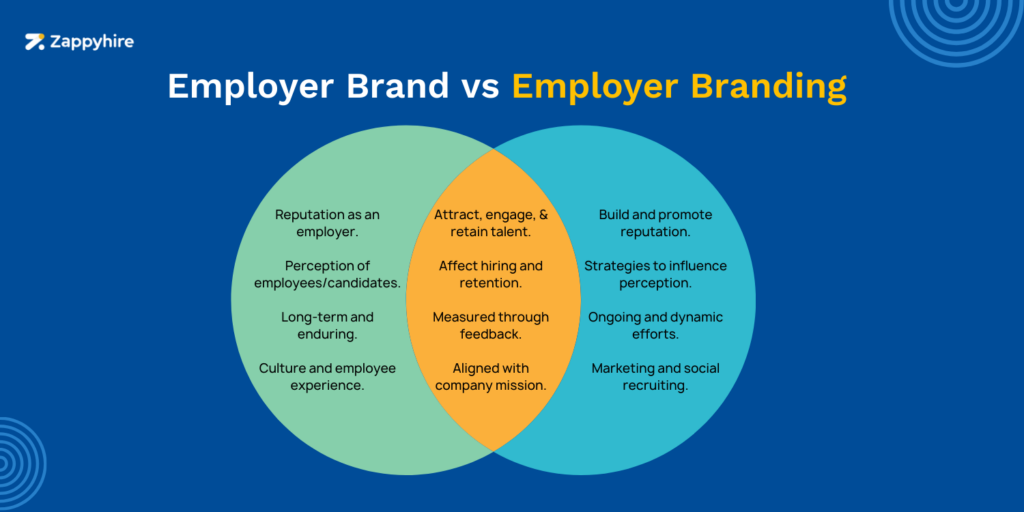
| If the employer brand is the image of the company as a great place to work, employer branding is the paint and tools used to create that image. |
Investing in a strong employer brand can yield significant returns for your company. But don’t just take our word for it – here are some tangible results.
When your company has a positive reputation as an employer, it attracts more candidates organically, reducing the need for expensive recruitment campaigns and third-party recruiters.
This efficiency can be further amplified with recruiting automation tools.
Companies with a strong employer brand find that their hiring processes are significantly faster, improving metrics like time-to-fill and time-to-hire.
🔖 Here’s an interesting read
Time to Hire – All You Must Know About This Key Recruitment Metric.
When candidates are already excited about your brand, they are more likely to accept job offers quickly, reducing the time spent on lengthy recruitment processes.
Retaining talent is just as crucial as attracting it. Effective retention strategies can drastically reduce attrition and help maintain a stable, engaged workforce.
A compelling employer brand helps build a positive workplace culture, leading to higher employee satisfaction and loyalty.
This results in a notable 28% reduction in turnover, saving costs associated with frequent rehiring and training.
In fact, a healthy employer brand leaves such a lasting, positive impression that departed talent often seeks to return.
Cultivating a culture that naturally welcomes back boomerang employees is the ultimate proof of a strong employer brand, allowing you to fill critical roles with pre-vetted professionals who already love your workplace.
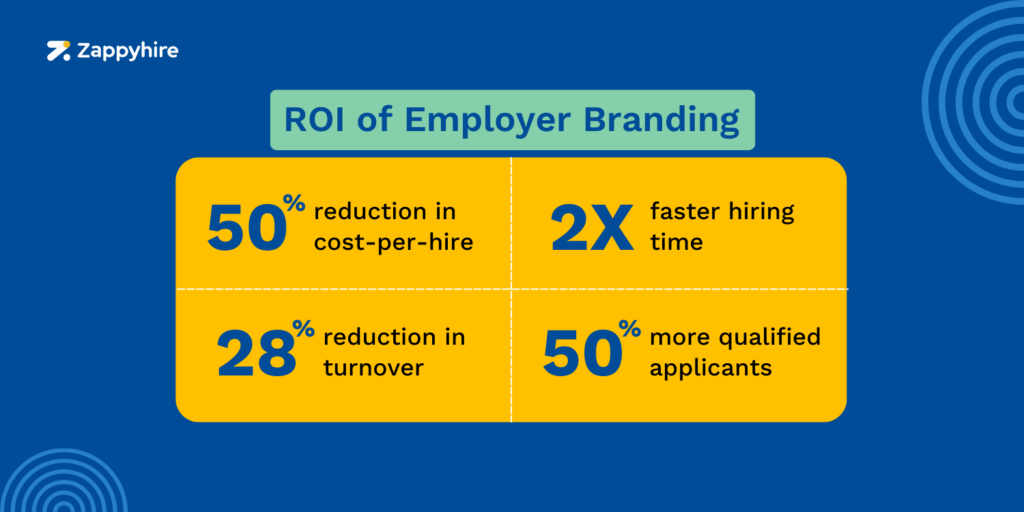
A strong employer brand doesn’t just attract more candidates – it attracts the right ones. Companies report receiving 50% more qualified applicants when their employer brand is well-regarded.
This means less time sifting through unqualified resumes and more time engaging with top talent who are a great fit for your company!
⌛ Want more tips on shortening the recruitment time?
Beat the Clock: Top 10 Time-Saving Recruitment Tips for Recruiters.
Creating an authentic connection starts with showing the human side of your company. People want to see the faces behind the brand, hear their stories, and understand the values that drive your company.
Share behind-the-scenes glimpses, employee spotlights, and real-life experiences that highlight what makes your workplace unique. This human touch not only attracts talent but also builds trust and relatability.
Before you can improve, you need to know where you stand. Take a deep dive into your current employer brand.
This involves evaluating your current employee engagement levels and employee satisfaction.
What do employees, candidates, and even the public say about your company as a place to work?
Conduct surveys, gather feedback, and analyze online reviews. Understanding your strengths and areas for improvement will give you a solid foundation to build on.
Just like marketing to customers, you need to know who your ideal candidates are.
What are their career aspirations, values, and preferences? Conducting thorough research on your target audience will help you tailor your employer brand message to resonate with the right people, whether they are seeking career development or career advancement.
Knowing your audience ensures that your efforts are focused and effective.
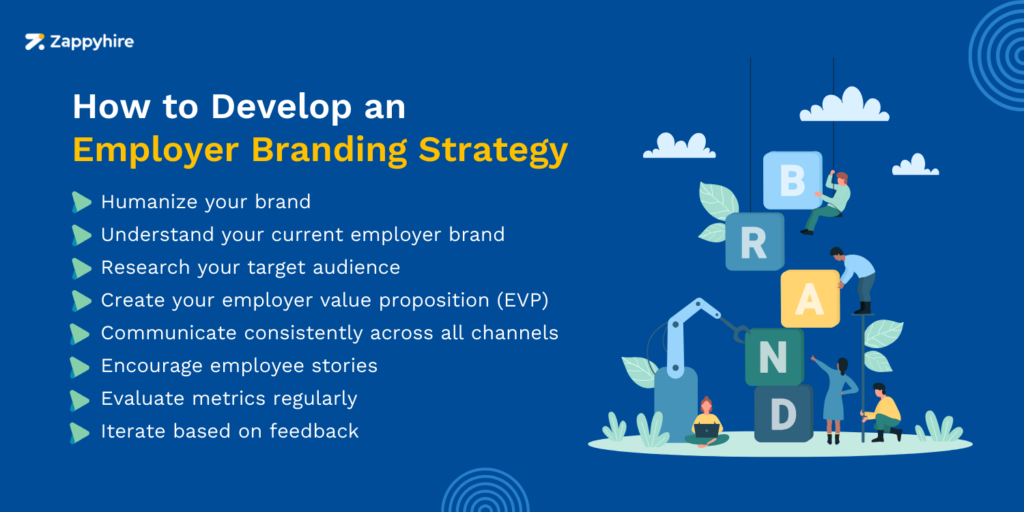
Your Employer Value Proposition (EVP) is the heart of your employer brand. It’s a clear, compelling statement that defines why someone should work for your company.
Your EVP should highlight the unique benefits, opportunities, and experiences that set your workplace apart. Creating a strong EVP will help you attract candidates who align with your values and culture.
Consistency is key to building a recognizable and trustworthy employer brand. Ensure that your brand message is cohesive across all touchpoints – whether it’s your website, social media, job postings, or interviews.
For example, use the same storytelling techniques in your recruitment videos as you do in your social media posts. Ensure all team members involved in recruitment convey the same key messages about the company culture and values.
Another instance would be to integrate your company’s mission statement into all job postings and highlight it in your social media updates. Ensure that the same enthusiasm and commitment to your values are evident in all interactions with potential candidates.
A consistent message reinforces your brand identity and makes it easier for potential candidates to understand and engage with your brand.
Your employees are your best advocates. Encourage them to share their stories and experiences.
Whether through blog posts, social media takeovers, or video testimonials, employee stories add authenticity and depth to your employer brand.
They provide real-life examples of your company culture and values in action, making your brand more relatable and credible.
To ensure your employer branding strategy is effective, regularly evaluate your metrics.
Track key indicators such as application rates, employee retention, and engagement levels. Using HR analytics and people analytics can provide deeper insights into these metrics.
📈 For more on how to use data effectively
What is People Analytics and How Can it Help in Hiring Top Talent
Building a strong employer brand is an ongoing process. Be open to feedback from employees and candidates, and use it to refine your strategy.
Whether it’s through formal surveys or casual conversations, gathering feedback will provide valuable insights into how your brand is perceived.
Iterating based on feedback ensures that your employer brand evolves with your company and the changing job market.
Social media, including platforms like LinkedIn, X (formerly Twitter), Facebook, and Instagram, is a powerful tool for employer branding, offering a platform to authentically share your company culture and engage both potential and current employees.
80% of prospective employees research potential employers on social media before applying. Glassdoor is used by 51%, LinkedIn by 60%, Facebook by 37%, and X by 36% of job seekers to gain insights about companies.
A comprehensive social media strategy is an integral part of recruitment marketing, helping to amplify your reach, attract top talent, and enhance your brand’s reputation.
The primary sources candidates check to learn about an employer are the company’s websites and social media.
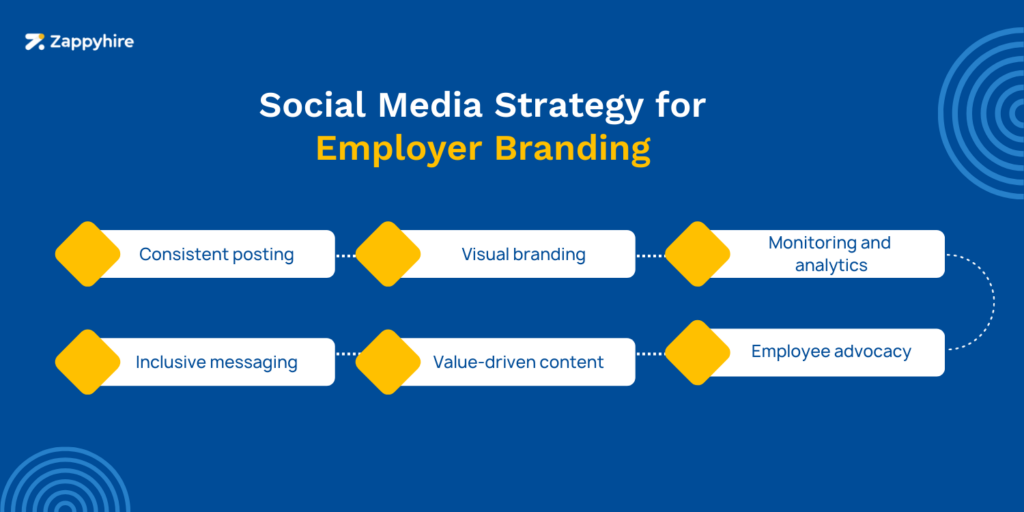
Regular posting keeps your audience engaged and your brand top-of-mind. Create a content calendar to plan and schedule posts in advance.
This not only ensures a steady flow of content but also helps you maintain a cohesive brand narrative. Remember, it’s not just about frequency – quality and relevance matter too.
Need content ideas for social recruiting? You can find them here and here!
Your employees can be your most powerful brand ambassadors. Candidates trust the company’s employees 3X more than the company to provide credible information on what it’s like to work there.
Encourage them to share their experiences, achievements, and workplace stories on their own social media channels.
This not only amplifies your reach but also adds a layer of authenticity to your brand. Employee advocacy programs can include incentives, branded hashtags, and easy-to-share content to motivate participation.
A picture is worth a thousand words, and in the world of social media, visuals are king.
Invest in high-quality images, videos, and graphics that reflect your company’s culture and values.
Consistent visual branding – using your logo, brand colors, and style – creates a recognizable and professional presence.
Whether it’s office snapshots, event photos, or infographics, make sure your visuals are engaging and on-brand.
Share content that goes beyond promoting your company. Offer value to your audience by posting industry insights, career tips, and thought leadership pieces.
Highlight your company’s commitment to professional development, community involvement, and employee well-being.
To fine-tune your social media strategy for employer branding, keep a close eye on your performance metrics.
Given that the top three channels for SMBs to extend their employer brand are the company website (69%), online professional networks (61%), and social media (47%), monitoring these platforms is crucial.
Use analytics tools to track engagement, reach, and audience growth.
Monitoring these metrics will help you understand what types of content resonate with your audience and where there’s room for improvement.
Diversity, equity and inclusion (DEI) should be at the heart of your social media strategy for employer branding. Ensure that your content reflects diversity and promotes an inclusive workplace.
Highlight stories and initiatives that celebrate different backgrounds, perspectives, and experiences.
Inclusive messaging not only attracts a broader talent pool but also strengthens your brand’s reputation as a welcoming and equitable employer.
🌈 For more on inclusive hiring practices
9 Diversity Hiring Strategies to Build an Inclusive Workplace.
An often-overlooked aspect of employer branding is the internal strategy, which focuses on how your brand is perceived by current employees.
Employee retention is directly linked to how employees perceive the organization’s branding efforts. Factors like compensation, career opportunities, and job satisfaction play significant roles.
It’s about creating a culture where employees feel valued, recognized, and connected to the company’s mission and values.
A strong internal brand not only boosts morale and productivity but also reduces turnover and attracts top talent through word-of-mouth.
Here’s what you should keep in mind to cultivate an outstanding internal employer branding strategy.

Open communication is the cornerstone of a healthy workplace.
Encourage transparency by regularly sharing company updates, successes, and challenges with your team. Create channels for employees to voice their opinions and ask questions.
When employees feel informed and heard, they are more likely to be engaged and invested in the company’s success.
Recognition goes a long way in building a positive work culture. Regularly acknowledge and celebrate employees’ achievements, both big and small.
Whether it’s through formal awards, team meetings, or a simple shout-out on the company intranet, recognizing hard work and contributions makes employees feel appreciated and motivated.
Prioritizing employee well-being shows that you care about more than just the bottom line.
Offer comprehensive health benefits, wellness programs, and flexible work options to support your team’s physical and mental health. This contributes to better work-life balance and reduces issues like absenteeism.
Organize wellness activities and provide resources that help employees maintain a healthy work-life balance.
A healthy team is a happy and productive team.
Cultivate a sense of ownership and involvement by including employees in decision-making processes.
Whether it’s through surveys, focus groups, or suggestion boxes, make it easy for employees to contribute ideas and feedback.
When employees feel their input matters, they are more likely to be engaged and committed to the company’s goals.
Creating opportunities for team bonding can significantly enhance workplace morale.
Organize team-building activities, social events, and collaborative projects that encourage employees to connect and build relationships.
A strong sense of camaraderie and team spirit can improve collaboration, communication, and overall job satisfaction.
Constructive feedback should flow both ways in a healthy work environment.
Encourage managers to provide regular, meaningful feedback and create a culture where employees feel comfortable sharing their thoughts and suggestions.
Implementing a feedback loop ensures continuous improvement and shows employees that their voices are valued.
Let’s examine the successful cases and identify the elements that contribute to an effective employer branding strategy.
Who doesn’t want to work at Google?
Known for its innovative workspace and enviable employee perks, Google has mastered the art of employer branding.
The “work hard, play hard” culture at Google is designed to attract top talent while setting realistic performance expectations.
“We believe in supporting the whole employee. Our wellness programs ensure that our team can maintain a healthy work-life balance”
– Elodie Lhuillier, HR Business Partner, Google Switzerland.
Netflix’s employer brand is built around simplicity and direct communication.
Their careers page’s straightforward message, “A great workplace combines exceptional colleagues and hard problems,” sets clear expectations.
“We believe in empowering our employees to make the best decisions for the company, which is why our policies are straightforward and trust-based”
– Sergio Ezama, Chief Human Resources Officer at Netflix.
MGM Resorts International faced a significant challenge during the pandemic with furloughs and layoffs. However, their commitment to their employees remained steadfast through their innovative alumni portal.
”Our alumni portal ensures that we stay connected with our former employees and support them in their career journeys.”
– Randy Goldberg, VP of Talent Acquisition Strategy.
As we’ve explored, a strong employer branding strategy not only attracts top talent but also significantly reduces hiring costs, speeds up the recruitment process, and enhances employee retention.
Investing in your employer branding strategy is investing in the future of your company.
So, take these insights, put them into action, and watch your company thrive as a top destination for the best and brightest in the industry!

Discover how Zappyhire helps large, multi-location hiring teams accelerate recruitment with AI-driven automation.
Schedule Demo