How to Automate Candidate Screening Before Interview Rounds
HR TechSeptember 18, 202612 MIN READ
Looking for something specific?
Check out the filters!
Still wondering how to perfect your pre-screening interview technique? Here’s a tip!
Pre-screening isn’t just about filtering out unqualified candidates; it’s about identifying those hidden gems early on.
By asking the right pre-screening questions for interviews, you ensure a stronger pipeline of talent that fits well with your company’s goals and culture.
Here’s where it gets interesting.
Asking the best pre-screening interview questions doesn’t mean coming up with stumpers or quirky puzzles. Instead, your focus should be on practical, job-relevant inquiries that cut to the chase.
Yes, we know it’s not a question, but here’s why it works.
Asking about their current role provides a quick snapshot of the candidate’s responsibilities and how relevant their current experience is to the position you’re hiring for.
🚩 What to watch out for – Vague responses or unrelated job duties.
This gets to the heart of their motivation and whether they’re genuinely interested in your company or just applying en masse.
So what you need to do is to look for specific details in their response that demonstrate genuine interest in your company.
For example, a candidate might say, “I’ve been following your company’s work, and I’m impressed by the change in your product line compared to 6 months ago,” or “I really appreciate the importance of collaboration in your work culture – it really aligns with my own values.”
This shows they’ve done their homework and have a clear reason for applying.
🚩 What to watch out for – Generic responses like “I just need a job” or no understanding of your company.
If your company thrives on collaboration but the candidate prefers working solo (and vice-versa), it’s better to know now than later.
It’s extremely important to ensure there’s crystal clear communication from the HR side about what the role demands in terms of the work environment.
For example, if it’s a hybrid role, specify upfront how often the candidate would need to visit the office (e.g., twice a week or once a month).
Likewise, confirm the candidate’s flexibility and expectations on this aspect to avoid misalignment later.
🚩 What to watch out for – Preferences that directly contradict your company’s work style or policies.
This is a straightforward question, but it’s essential to avoid mismatched expectations later. It helps you gauge if their desired compensation fits within your budget.
🚩 What to watch out for – Expectations significantly above your budget with little flexibility to negotiate.
Timing is everything in recruitment. Knowing their notice period ensures you can plan the onboarding process and project timelines accordingly.
🚩 What to watch out for – Long notice periods that could affect your immediate needs.
This open-ended question gives candidates a chance to highlight their unique value while showing how well they understand the role and its requirements.
🚩 What to watch out for – Vague answers that fail to tie back to the job description or your company’s goals.
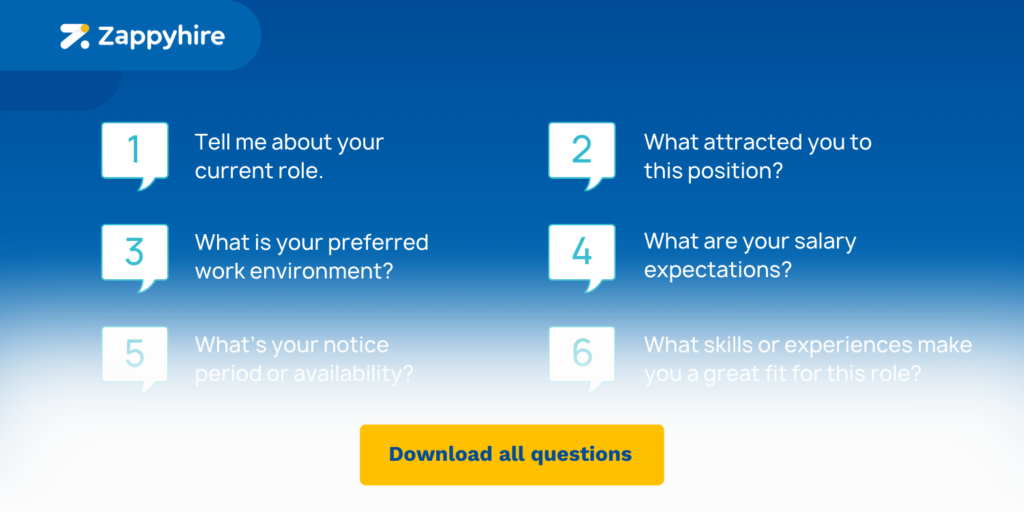
If you want all the questions, simply click the image below to download the PDF – no need to enter any information!
This question reveals their aspirations and priorities, such as career growth, work-life balance, or specific responsibilities, helping you determine if your company can meet their expectations.
🚩 What to watch out for – Misaligned goals or expectations that don’t fit with what your company offers.
Everyone has a preferred management style, and understanding this helps predict how well they’ll work with their potential manager.
🚩 What to watch out for – Preferences that clash with the management style in your organization.
This question gauges their technical proficiency and familiarity with tools relevant to the job. It’s especially critical for roles requiring specific software expertise.
🚩 What to watch out for – A lack of experience with core tools essential for the role.
Time management is important for most roles, isn’t it? This question takes a look into their ability to handle pressure and manage competing priorities.
It’s best to ask follow-up questions to understand their systems for managing multiple deadlines.
For instance, do they use project management tools like Trello or Asana? Or do they rely on tracking through Excel sheets or to-do lists?
This gives insights into their organizational skills, especially if the role entails collaboration and coordination with other team members.
🚩 What to watch out for – Disorganized or overly simplistic approaches to handling deadlines.
This question sheds light on their career motivations, whether they are looking for growth, stability, a change in work environment or something else.
🚩 What to watch out for – While expressing dissatisfaction with previous employers might sometimes highlight genuine concerns, it’s best to assess the context and tone.
Look for patterns of instability in their working style, recurring conflicts, or a lack of clear and well-thought-out reasons for leaving.
This question explores emotional intelligence, self-awareness, and their ability to handle criticism constructively.
🚩 What to watch out for – Responses that show defensiveness or inability to accept feedback.
A glimpse into their career aspirations helps determine if they align with the growth opportunities your organization offers.
🚩 What to watch out for – Overly generic responses or goals that don’t fit within your company’s trajectory.
Curiosity is a great indicator of engagement. This question also allows you to address any lingering concerns or clarify details about the role.
🚩 What to watch out for – A lack of questions, which could signal low interest or poor preparation.
This question ensures that both sides are on the same page and helps clear up any potential confusion early in the hiring process.
🚩 What to watch out for – Misunderstandings about critical aspects of the role or company expectations.
| 💡Want to automate these 15 questions? You can filter out unqualified profiles instantly with our automated video interview tool – book a demo today! |

Pre-screening interviews are meant to quickly evaluate fit, so aim for 15-20 minutes max. Respecting your candidate’s time shows professionalism and helps maintain a positive candidate experience.
A consistent set of questions helps you compare candidates fairly without missing key insights.
Plus, with automated video interviewing tools like ZappyVue, you can automate the process.
Create question sets once, let candidates respond on their schedule, and easily review the answers when you’re ready. It’s a win-win!
Ask short, straightforward questions. Candidates shouldn’t feel like they’re sitting through a quiz marathon.
Focus on the essentials to quickly assess skills, experience, and cultural fit.
Share the purpose and format of the pre-screening interview upfront.
A little clarity goes a long way in easing candidate nerves and ensuring they put their best foot forward.
Remember, you’re not just evaluating them – they’re evaluating you, too.
A smooth, professional process reflects positively on your employer brand and could be the deciding factor for top talent.
Discover how Zappyhire helps large, multi-location hiring teams accelerate recruitment with AI-driven automation.
Schedule Demo